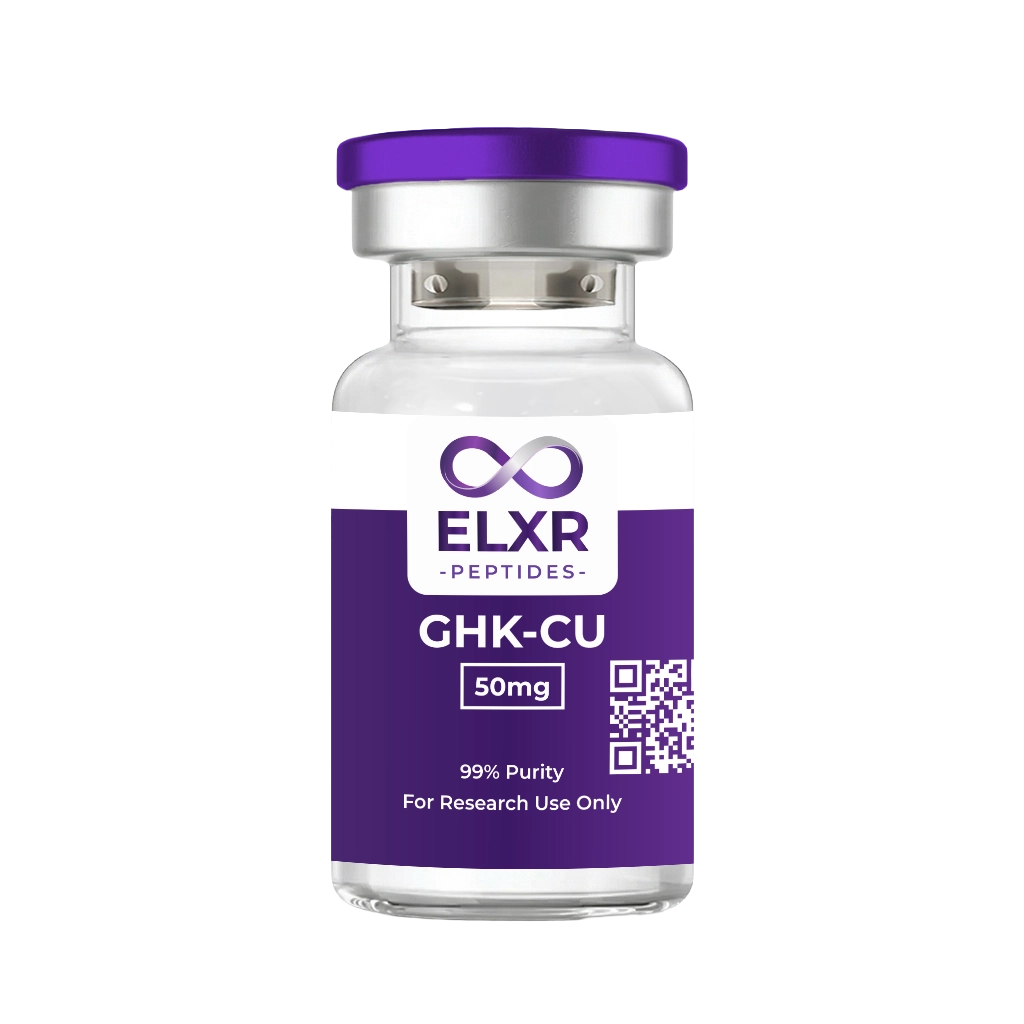
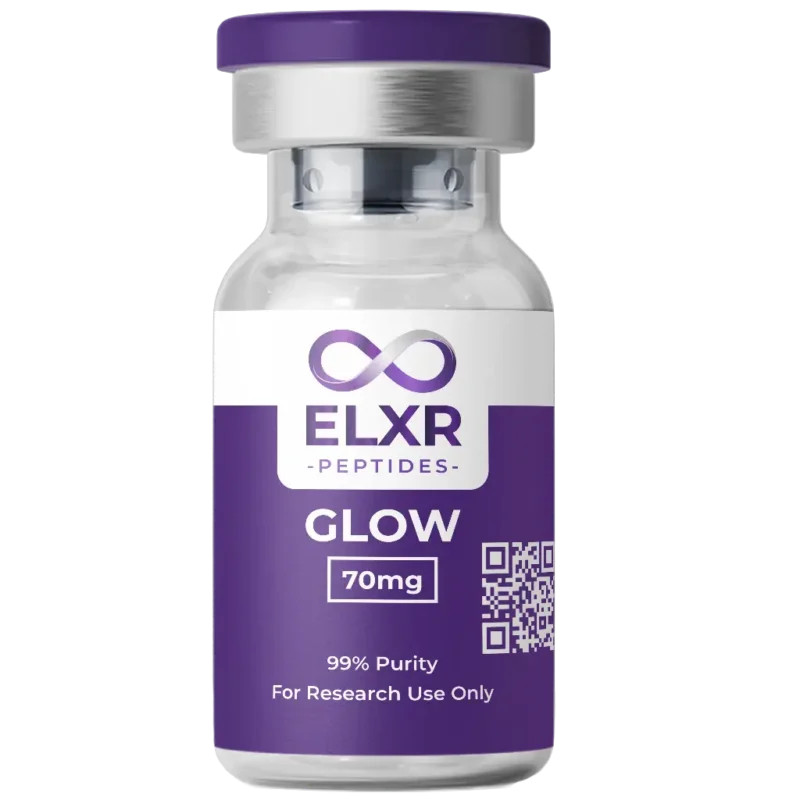
GHK-Cu is a naturally occurring copper-binding tripeptide (Gly-His-Lys + Cu²⁺) found in human plasma, saliva, and urine. Plasma concentrations decline approximately 60% between ages 20 and 60, making it a core subject of aging and regenerative research. It is documented to stimulate collagen type I and III synthesis by up to 70%, activate fibroblasts, promote angiogenesis, and influence approximately 31% of studied human genes related to tissue repair and antioxidant defense.
Research Overview
GHK-Cu acts as an endogenous tissue repair signal released from damaged collagen during injury. The copper ion serves as an essential cofactor for enzymes involved in collagen cross-linking and antioxidant activity. The tripeptide complex activates fibroblast proliferation and upregulates collagen, elastin, glycosaminoglycan, and decorin synthesis.
Its gene-regulatory activity is exceptionally broad — research examining human genome responsiveness has identified approximately 31% of studied genes as responsive, spanning tissue repair, inflammation control, antioxidant pathways, and cellular protection. Studies consistently document improvements in skin elasticity, wound closure rates, and hair follicle density, making GHK-Cu one of the most comprehensively studied peptides in regenerative dermatology.
Key Features
- Naturally occurring tripeptide: Gly-His-Lys complexed with copper (Cu²⁺)
- Molecular weight: 404.96 Da; half-life: ~30 min–2 hours
- Plasma levels decline ~60% with age (~200 ng/mL at age 20 → ~80 ng/mL at age 60)
- Influences expression of ~31% of studied human genes linked to repair and regeneration
- Stimulates collagen type I and III synthesis by up to 70% in studied models
- Activates fibroblasts; promotes elastin, glycosaminoglycan, and decorin production
- Promotes angiogenesis; modulates inflammatory cytokines; supports hair follicle activity
Common Research Uses
- Commonly studied for collagen and elastin synthesis and dermal extracellular matrix remodeling
- Researched in relation to wound healing, skin barrier repair, and angiogenesis
- Investigated for anti-aging skin applications and reduction of fine lines and laxity
- Studied in models of hair follicle activation and scalp health
- Researched for broad gene-regulatory activity and antioxidant pathway modulation
- Frequently studied in combination with BPC-157 and TB-500 for skin regeneration protocols
Product Specifications
- Format: Lyophilized powder
- Vial size: 50mg or 100mg
- Storage: Freeze at −20°C (lyophilized); refrigerate at 2–8°C after reconstitution; protect from light and moisture; use within 28 days
Disclaimer: For research purposes only. Not for human consumption.